

This month we’re highlighting one of the most talked-about research pieces currently featured on Haworth Europe: neurodiversity in the workplace. Haworth’s global research confirms that people experience the same office in profoundly different ways — and that a flexible ecosystem of spaces, not a single fix, is what helps everyone do their best work.
An estimated 15–20% of the global population identifies as neurodivergent, a share that keeps growing among younger generations entering the workforce, and Haworth’s researchers found that nearly nine in ten neurodivergent employees say their physical surroundings directly affect their stress levels at work. The findings point to eight distinct sensory systems, including sight, sound, smell, touch and a sense of movement in space, that shape how comfortable, focused or overwhelmed someone feels in an office. Uncomfortable lighting, background noise, strong smells or even the texture of a chair’s upholstery can trigger real fatigue and frustration for neurodivergent colleagues, while having little to no effect on neurotypical ones. The takeaway for employers is practical: organisations that build in variety, user control and genuine choice see measurably lower stress and stronger engagement across the whole team, not just among neurodivergent staff. It’s also a sound business case: Haworth links inclusive, diversity-minded workplaces to teams that are far more likely to capture new markets and hit their financial targets.
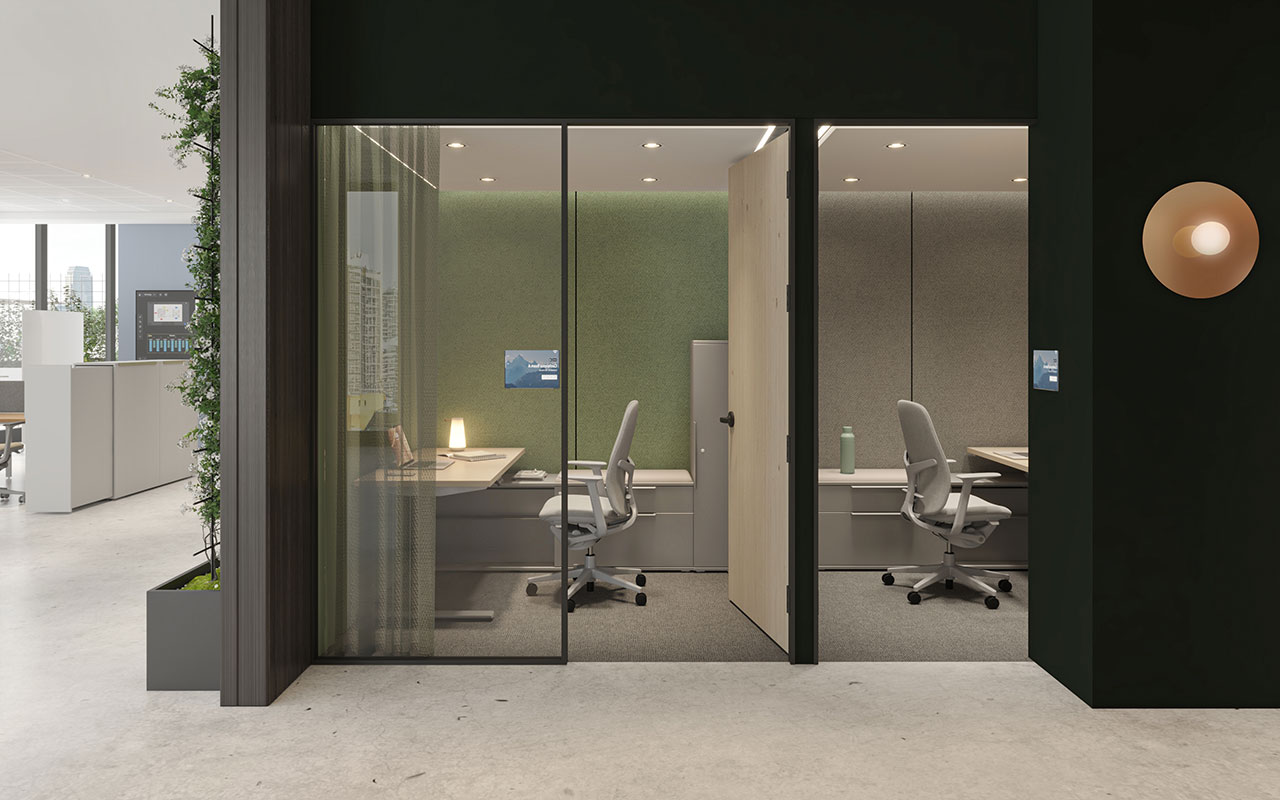
Spaces for Focus
Quiet rooms, tactile palettes, adjustable lighting and easy booking give people the choice to step away when they need to concentrate. Layered privacy and thoughtful acoustics help everyone find their own version of calm during the workday. For neurodivergent employees in particular, the ability to escape overhead glare, ambient office noise or unpredictable interruptions can be the difference between a productive hour and a genuinely exhausting one. Haworth’s research points to a few specific levers that matter most: dimmable, indirect lighting instead of harsh overheads; sound-absorbing materials and enclosed geometry to dampen chatter; and furniture upholstered in fabrics that have actually been tested for tactile comfort, since something as small as a scratchy seat can become a real distraction over a full day. Making these spaces easy to find and book, rather than something people have to hunt for or apologise for using, signals that stepping away to focus is a normal, supported part of how the office works, not a workaround.
 Community Hubs
Warm light, biophilia and clear lines of sight bring active and quiet zones together in one hub. Soft transitions between them help people move naturally between social energy and personal space, without either feeling forced. This matters because collaboration spaces are often designed with a single, high-energy mode in mind, which can work well for some employees and feel overstimulating for others. A well-designed hub instead offers a gradient: a livelier zone near the entrance for spontaneous conversation, gradually giving way to calmer perches further in, so people can choose their own comfortable distance from the buzz rather than being dropped straight into it. Plants, natural materials and visual connection to daylight also do real work here: Haworth’s broader wellbeing research consistently links biophilic elements to lower reported stress, regardless of whether someone identifies as neurodivergent. The goal isn’t to eliminate energy from the office, but to give people a say in how much of it they’re standing in at any given moment.
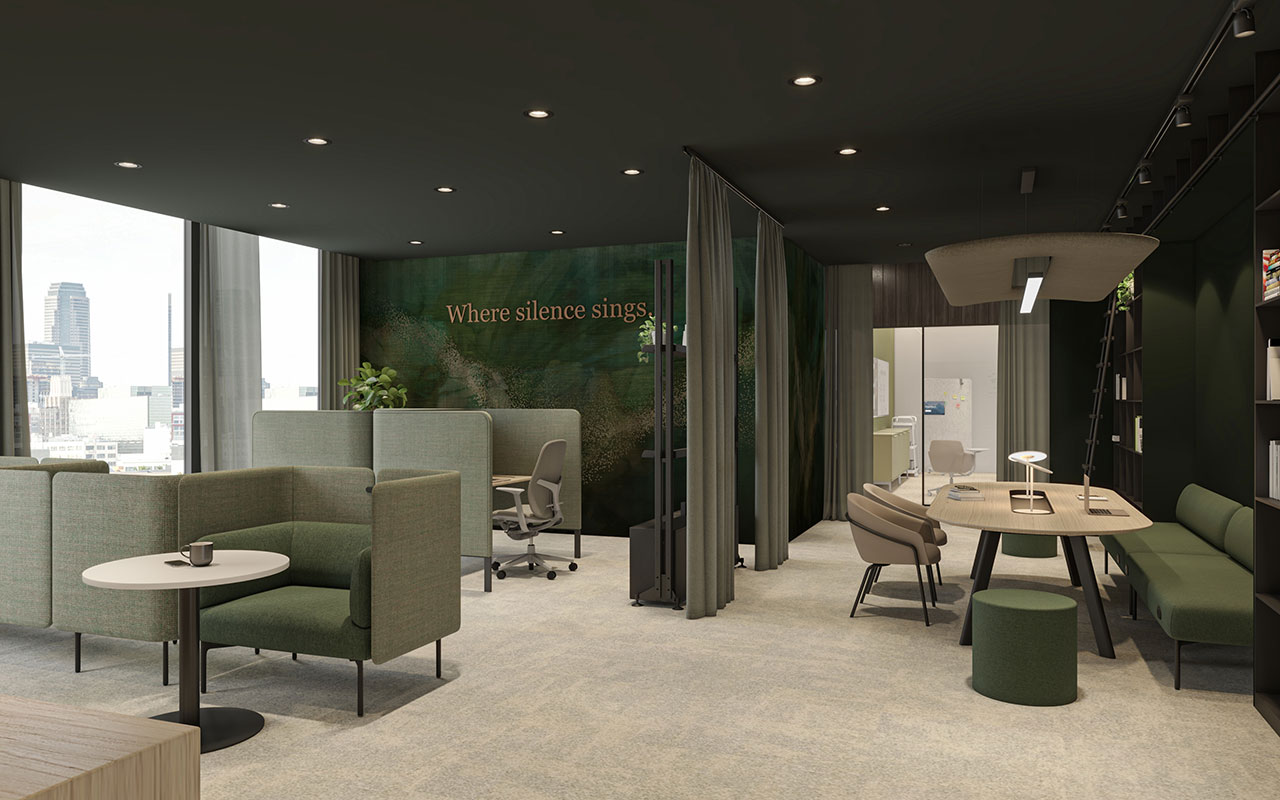
Restorative Corners
Darker tones, layered lighting and user-controlled settings turn a small corner into a genuine reset point, a place to recalibrate before heading back into a busy day. Haworth’s researchers describe this as one of the most consistently requested, and most consistently under-provided, space types in the modern office. Unlike a focus room, a restorative corner isn’t about getting work done at all; it’s a brief, low-stakes pause that lets someone’s nervous system settle before the next meeting or task. Simple, low-cost elements go a long way: seating that lets a person angle away from foot traffic, a dimmer switch or warm lamp instead of fluorescent overheads, and one or two controls, such as light, a bit of white noise, or maybe a door that actually closes, that the person themselves can adjust. Employees who had access to this kind of resource reported significantly better ability to manage stress and recover their focus afterward, which is a meaningful return for what is often just a repurposed corner of the floor plan.